Direct-to-consumer (D2C or DTC) brands face unique challenges in the digital ecommerce.
Unlike traditional retailers who compete primarily on product selection and price, D2C brands must build their entire identity from scratch while navigating an increasingly crowded online landscape.
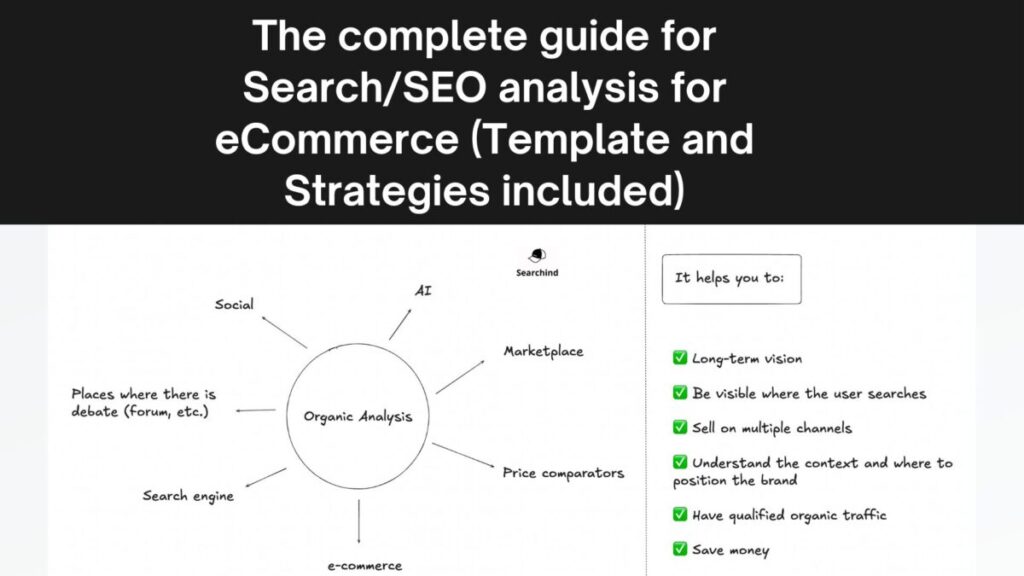
D2C brands need to be present on organic; it's the foundation of sustainable, scalable growth.
This guide focuses on the strategic elements that separate successful D2C SEO campaigns from generic ecommerce optimization efforts.
You'll learn how to grow a sustainable D2C ecommerce.
Understanding D2C SEO
While both D2C and traditional ecommerce sites compete for search visibility, their strategic approaches differ significantly.
Understanding these distinctions helps you allocate resources effectively and set realistic expectations.
Building your SEO foundation
Branded vs. Non-Branded Search
One of the most important analyses you'll conduct separates branded from non-branded search traffic.
This distinction reveals whether your SEO efforts are truly expanding your audience or simply capturing people who already know about you.
Branded searches include your company name, product names, or any terms strongly associated with your brand.
For a company like Bombas, branded searches include:
- "bombas"
- "bombas socks"
- "bombas socks review"
- "where to buy bombas"
Non-branded searches represent people solving problems or seeking products without knowing your brand exists:
- "best socks for standing all day"
- "comfortable socks that don't slip"
- "diabetic-friendly compression socks"
- "socks that give back to charity"
Branded traffic typically converts at higher rates because these visitors already have awareness and intent. However, branded traffic has a ceiling; it only grows as fast as your overall brand awareness.
Non-branded traffic represents true market expansion, capturing customers before they've decided on a solution.
Analyzing Your Search Mix:
Use Google Search Console to export your search query data. Create a spreadsheet with these columns:
- Search query
- Impressions
- Clicks
- Click-through rate
- Average position
- Category (branded/non-branded)
Categorize each query by creating a filter that flags any query containing your brand terms. Calculate the percentage of impressions and clicks from each category.
Healthy benchmarks vary by industry and brand maturity, but consider these guidelines:
- New brands (< 2 years): 70-80% branded traffic is normal as you're building awareness through other channels
- Growing brands (2-5 years): Target 50-60% non-branded as your content strategy matures
- Established brands (5+ years): Aim for 60-70% non-branded traffic, showing strong organic discovery
If your traffic is heavily branded, your SEO strategy isn't reaching new audiences.
If it's heavily non-branded but conversion rates are low, you may be targeting the wrong queries or need stronger brand differentiation.
You can use this template sheet.
Conducting a Competitive Analysis
Understanding your competitive position is essential for setting realistic goals and identifying opportunities.
The D2C space is uniquely challenging because you often compete with both direct competitors (other D2C brands) and traditional retailers selling similar products.
Your SEO competitors aren't always your business competitors.
They're whoever ranks for the keywords you want to rank for.
Start by identifying three types of competitors:
1. Direct D2C Competitors: Other brands selling similar products directly to consumers in your category.
2. Indirect Competitors: Businesses solving the same problem differently or serving adjacent customer needs.
3. Content Competitors: Publishers, review sites, or informational resources ranking for your target keywords without selling competing products.
How to Find Them:
- Manual Search Method: Search for 5-10 of your most important non-branded keywords. Note which domains consistently appear in the top 10 results. These are your SEO competitors for these queries.
- Tool-Based Discovery: Use Semrush, Ahrefs, or Ubersuggest's "Competitors" feature. Enter your domain to see sites with overlapping keyword rankings.
3. Keyword Overlap Analysis: Export your current rankings from Search Console, then check each keyword in your SEO tool to see who else ranks for those terms.
Conducting the competitive benchmark
Once you've identified 5-10 primary competitors, create a competitive matrix comparing the major metrics:
For each competitor, document:
This comparison reveals your relative position and helps set realistic improvement targets.
If your domain authority is 25 and your main competitor's is 55, you won't outrank them on competitive head terms in the short term.
Instead, focus on long-tail opportunities and niche topics where domain authority matters less.
Deep-Dive keyword analysis
Beyond high-level metrics, analyze what types of keywords your competitors rank for.
Export their top-ranking keywords using your SEO tool and categorize them:
- Informational content (how-to, guides, questions)
- Commercial investigation (reviews, comparisons, "best" queries)
- Transactional (product names, "buy" queries)
- Navigational (brand names, specific page searches)
A competitor with 60% informational keywords is investing heavily in top-funnel content. One with primarily product terms focuses on bottom-funnel capture.
Identify keyword gaps: Most SEO tools offer a gap analysis feature showing keywords your competitors rank for that you don't. These represent immediate opportunities, especially for:
- High-volume, low-difficulty keywords they rank for in positions 4-10
- Question-based keywords where you can provide better answers
- Product comparison terms where you can insert your brand
Backlink profile analysis
Understanding how competitors build authority helps you develop your own link-building strategy:
For each top competitor, review:
- Link sources: What types of sites link to them? (Industry publications, news sites, blogs, directories)
- Content attracting links: Which of their pages have the most referring domains? This reveals what content types earn links in your industry.
- Link building tactics: Look for patterns suggesting specific strategies (guest posting, digital PR, partnerships, resource pages)
For example, if a competitor has many links from .edu sites, they may be offering student discounts or creating educational resources.
Links from industry publications suggest active PR outreach. Numerous blog links might indicate an influencer partnership program.
Red flags to note:
- Links from irrelevant sites or other countries (potential paid links)
- Sudden spikes in backlinks (link schemes or campaigns)
- Links from low-quality directories or spam sites
These observations inform your own strategy while helping you avoid tactics that could trigger penalties.
If you want to learn more about link building analysis.
Strategic Keyword Development for D2C Brands
Keywords form the foundation of your SEO strategy, but not all keywords are created equal.
D2C brands need a sophisticated approach that balances search volume with strategic value.
Understanding the distinction between short-tail and long-tail keywords is essential for allocating your optimization efforts effectively.
Short-Tail Keywords (also called "head terms"):
- Represent broad, general topics
- Generate high search volume
- Show lower, less specific intent
- Face intense competition
- Convert at lower rates
Examples: "running shoes," "mattress," "skincare," "coffee"
Long-Tail Keywords:
- Contain 3+ words, often 4-6 words (it depends)
- Generate a lower individual search volume
- Demonstrate clear, specific intent
- Face less competition
- Convert at higher rates
Examples: "best running shoes for flat feet women," "organic memory foam mattress without chemicals," "skincare routine for sensitive acne-prone skin," "fair trade single origin coffee beans"
Short-tail keywords attract massive traffic but are dominated by established players with high domain authority.
A new D2C running shoe brand will struggle to rank for "running shoes" against Nike, Adidas, and major retailers.
However, "sustainable running shoes for trail running" presents a realistic opportunity.
Someone searching "mattress" could be researching, comparing, or just browsing. Someone searching "best organic mattress for side sleepers under $1000" is much closer to a purchase decision and knows what they want.
Mapping Keywords to different stages of the customer journey
The most sophisticated D2C brands map them to customer journey stages, creating content that serves people regardless of where they are in their decision process.
The Four-Stage Framework:
Stage 1: Awareness (Short-Tail + Non-Branded) The customer is exploring broadly, often just recognizing they have a problem or desire.
"What options exist? What should I know?"
Example queries:
- "period care products"
- "sustainable furniture"
- "home workout equipment"
- "organic baby food"
Your content goal: Education and inspiration. Introduce your product category and the problems you solve.
Don't hard-sell; provide genuine value that positions you as a knowledgeable resource.
Content types:
- Ultimate guides ("Complete Guide to Sustainable Period Care")
- Problem-focused content ("Why Conventional [Product] Contains Harmful Chemicals")
- Category education ("Types of [Product]: What You Need to Know")
Stage 2: Consideration (Long-Tail + Non-Branded) The customer understands the solution category and is evaluating specific options and features.
"Which specific type is right for my needs?"
Example queries:
- "reusable menstrual cup vs period underwear"
- "modular sectional sofa for small spaces"
- "adjustable dumbbells vs kettlebells home gym"
- "best organic baby food for 6-month-old"
Your content goal: Demonstrate that your specific solution fits their needs better than alternatives. Address specific use cases, concerns, and requirements.
Content types:
- Comparison content (featuring your product)
- Use case guides ("Best [Product] for [Specific Need]")
- Buying guides with recommendations
- Detailed how-to content addressing specific scenarios
Stage 3: Evaluation (Short-Tail + Branded) The customer has discovered your brand and wants to learn more about your company, products, and reputation.
"Is this brand trustworthy? What do others think?"
Example queries:
- "[Your brand] review"
- "[Your brand] products"
- "is [your brand] legit"
- "where to buy [your brand]"
Your content goal: Build trust and address concerns. Showcase social proof, transparency, and your brand story.
Content types:
- About page optimized for brand searches
- Customer reviews and testimonials
- Brand story and values content
- Product overview pages
Stage 4: Decision (Long-Tail + Branded) The customer is interested in specific products and close to purchasing. They're looking for final details to confirm their choice.
"Is this specific product right for me? Where's the best place to buy?"
Example queries:
- "[Your brand] [specific product] review"
- "[Your product] vs [competitor product]"
- "[Your product] size guide"
- "[Your brand] discount code"
- "how to use [your specific product]"
Your content goal: Remove final purchase barriers and capture the sale.
Content types:
- Detailed product pages with comprehensive information
- Product-specific FAQs
- Sizing, usage, and care guides
- Comparison content positioning your product favorably
Building Your Keyword Map:
Create a spreadsheet organizing your target keywords:
KeywordSearch VolumeDifficultyStagePriorityContent TypeURL
Populate this with 50-100 initial target keywords across all stages.
This becomes your content roadmap.
Notice gaps in your coverage? Perhaps you have strong Stage 4 content but weak Stage 1 awareness content, this limits top-of-funnel growth.
Remember that customers don't move linearly through stages.
Someone might discover your brand through social media (skipping Stage 1), then search for non-branded comparison content (Stage 2), then circle back to branded searches (Stage 3-4). Your SEO strategy should have strong content at every stage to capture customers regardless of their entry point.
If you want to learn more about organic analysis.
Optimizing category
Category pages represent one of the highest-leverage optimization opportunities for D2C brands.
These pages serve both user navigation and SEO purposes, making them critical for organic visibility.
A running shoe retailer might have 20 shallow category pages organized by brand.
A D2C running shoe company has 3-5 meaningful collections (trail running, road running, racing, training) where they can provide substantial educational content.
What can you do
Above the Fold:
Clear H1 heading with primary keyword, in this case, is "Progressive Sunglasses".
Use a clear title with main keywords and your brand. In general, it's better to position for a long-tail keyword rather than a competitive short keyword.
Brief value proposition (1-2 sentences).
Product grid with clear navigation.
Below the Product Grid:
Different words of optimized descriptive content into keywords.
Internal links to related categories and content.
FAQs section addresses common questions.
These are only examples; each DTC has a personal differentiation.
Technical requirements for Category Page optimization
Before you can optimize content, ensure your category pages meet these technical requirements:
URL Structure:
✅ Clean, keyword-rich URL: yourstore.com/sustainable-running-shoes
❌ Dynamic, parameterized URL: yourstore.com/products?category=shoes&filter=sustainable
Site Architecture:
- Category pages should be accessible within 3 clicks from the homepage
- Include category pages in the main navigation where appropriate
- Ensure all category pages are in your XML sitemap
- Create a "Shop by Category" page linking to all categories
On-Page Elements:
- Unique, keyword-optimized meta title (50-60 characters)
- Compelling meta description (150-160 characters)
- Keyword in H1 tag
- Schema markup for product category
- Mobile-responsive design
- Fast page load speed
Don't focus only on socials
Many DTC brands focus only on Instagram or similar.
If you have a solid presence on Instagram, probably many people will search on Google, because many conversions are there.
For this reason, I advise EVER to do a basic SEO setup.
Here is an example.
Sunnei is a DTC that sells shoes, bags, etc.
They have a decent search volume on the site, especially for brand keywords.
If you search on Google, the best searches like "Sunnei orecchini" and "Sunnei borse", there are problems:
- The title is not optimized well, which can cause a loss of clicks that Farfetch can take advantage of because it has a clear title. This is a small detail, but having a good title can bring better results. In this case, Farfetch taking many clicks is not good because you're the primary brand, and for these searches you should be clicked first, also because you could get a sale with a higher margin than one made on a marketplace.
- For this search, it is very important to appear first. Marketplaces are useful because you take advantage of their internal traffic, not for covering your brand keywords better than your DTC.
Pay more attention to these details.
I advise ever to implement this when the site is being built.
Expand organically
You can take advantage of the marketplace's internal traffic because it has invested a lot of money to have a strong position in the market.
For example, Sunnei chooses different marketplaces:
Here, analyze which marketplaces could be a good source of awareness and sales.
Build a solid FAQ page
Identify the most frequent questions your sales and customer support teams receive. Select the top 3-5 inquiries and complete this analysis for each one.
Try also to understand how competitor structured their FAQs page.
For example, they have a good FAQs page https://www.warbyparker.com/help - https://www.brooklinen.com/pages/faq.
When creating FAQs for your product pages, focus on product-specific inquiries rather than generic category questions.
Skip the broad approach like:
- "What is [product category]?"
- "Why use [product category]?"
- "How does [product category] work?"
For an ecommerce example with running shoes:
- "Are [Brand] running shoes true to size?"
- "What's the cushioning level in the [Model Name]?"
- "Can [Brand] shoes handle wet conditions?"
There's also a hidden advantage: this shapes how AI models talk about your product.
Well-crafted FAQs help:
- Provide accurate brand information in AI responses
- Position your product when users search for particular capabilities
Don't just "add FAQs" generically.
Make them about your specific product's features and concerns, not about the broader category it belongs to.
Here is a template.
Create a dedicated page
Many DTCs miss out on opportunities to gain traffic from branded searches.
For example, here are some branded search terms that your brand may not be covering:
- [Brand] + prices
- [Brand] + reviews
- [Brand] + alternatives
- [Brand] + case studies
- [Brand] vs [Competitor]
- [Brand] + login/support
- [Brand] + careers
- [Brand] + category or product
- [Brand] + Black Friday
- [Brand] + discount code
Taking the example of [Brand] + discount code: if you search in an SEO tool like Ahrefs, you can see that many of these branded queries have significant monthly search volume.
Brand-specific discount code keywords are generating massive search volumes:
- "eBay discount code" - 12,000 monthly searches
- "Halfords discount code" - 11,000 monthly searches
- "Cake Box discount code" - 5,300 monthly searches
- …
And it's not just the big players.
Even smaller brands are seeing thousands of monthly searches for their discount codes.
When potential customers search for "[your brand] discount code," where do they land?
If you don't have a dedicated discount code page, they're likely ending up on:
- Voucher aggregator sites
- Competitor review sites
- Outdated forum posts
- Third-party coupon platforms
You're literally sending qualified, high-intent customers to other websites.
The Solution: Create a dedicated discount code landing page
A well-optimized discount code page serves multiple purposes:
- Captures organic search traffic for branded discount code terms
- Controls your brand narrative instead of letting third parties do it
- Converts browsers into subscribers by offering codes in exchange for email signups
- Reduces dependency on voucher code affiliate sites
- Improves user experience by giving customers what they're searching for
Real-World Example: eBay
eBay demonstrates this strategy effectively with its dedicated app discount promotion page:
Key Elements:
- Clear, prominent headline: "App discount coupon!"
- Specific value proposition: 15% off up to €100 with code MITAPPEBAY18
- Strong call-to-action: "Start shopping" button
- Visual demonstration showing the mobile app in use
- Code displayed clearly both in the description and the highlighted section
- Clean, branded design with eBay's signature colors
Their approach provides immediate value to searchers while driving app downloads and purchases.
How to Implement This Strategy
Step 1: Research Your Keywords
Check your Google Search Console data for "[your brand] discount code" searches and see how much traffic you're missing out on.
Check if people are already searching for your discount codes. Look for patterns like:
- "[brand name] discount code"
- "[brand name] promo code"
- "[brand name] voucher"
- "[brand name] coupon"
Step 2: Create Your Landing Page
Include these essential elements:
- Clear H1 tag with your brand name + "discount code"
- Explanation of your discount code policy
- Email signup form to receive the code
- Relevant keywords are naturally integrated
- Clean, professional design
Step 3: Optimize for SEO
- Use descriptive title tags and meta descriptions
- Include schema markup for special offers
- Add internal links from your main navigation or footer
- Create relevant supporting content about your offers
Step 4: Be Honest and Transparent
- If you don't work with voucher sites, say so
- Clearly state what discount you're offering
- Set proper expectations about code validity and terms
Thousands of people are searching for your discount codes every month.
By creating a dedicated landing page, you can:
- Reclaim this search traffic
- Build your email list with qualified leads
- Control your brand messaging
- Reduce reliance on third-party voucher sites
- Create a better customer experience
Don't let voucher aggregators profit from your brand's search traffic.
Take control with a dedicated discount code page.
Measuring success and iterating
Implementing these strategies requires ongoing measurement and refinement. Track these metrics:
Keyword Performance:
- Rankings for target keywords across all journey stages
- Movement in rankings (which keywords are improving/declining?)
- New keywords you're starting to rank for
Traffic Metrics:
- Total organic traffic trend
- Branded vs. non-branded traffic split
- Traffic to the category/product pages specifically
- Landing pages are driving the most organic traffic
- Social organic traffic
Conversion Metrics:
- Revenue from organic traffic
Conclusion
D2C SEO success requires a strategic, patient approach that differs significantly from traditional ecommerce optimization.
Remember that SEO is a long-term investment.
Most brands see meaningful results after 6-12 months of consistent effort.
The brands that win in D2C SEO are those that commit to the strategy, measure progress religiously, and continuously refine their approach based on data rather than assumptions.